China–Taiwan
Two non-kinetic outcomes
Two kinetic outcomes
An 84% chance the coming year stays below the threshold of combat — and a danger that is a low year, not a low decade.
This decomposition reflects SIGMA's published judgement as of the assessed date. It is a committed, point-in-time position rather than a live figure; ongoing working analysis is available to members.
- 1949The Chinese Civil War ends and the Republic of China government relocates to Taiwan.
- 1950The United States deploys the Seventh Fleet to the Taiwan Strait.
- 1954–55First Taiwan Strait Crisis; PRC forces shell Republic of China-controlled offshore islands.
- 1958Second Taiwan Strait Crisis; PRC forces bombard the islands of Kinmen and Matsu.
- 1971The United Nations transfers China's seat from the Republic of China to the People's Republic of China.
- 1979The United States switches diplomatic recognition to Beijing and passes the Taiwan Relations Act.
- 1996Third Taiwan Strait Crisis; PRC missile tests near Taiwan draw two U.S. carrier groups.
- 2005The People's Republic of China enacts the Anti-Secession Law.
- 2022Large-scale PLA exercises encircle Taiwan following a senior U.S. congressional visit.
- Throughout 2024The People's Republic of China conducts large-scale military exercises around Taiwan.
- Early 2025The People's Republic of China increases gray-zone air and maritime incursions around the Taiwan Strait.
- Mid-2025Taiwan expands its United States arms procurement and enacts domestic defence reforms.
- Late 2025The People's Republic of China and Russia conduct joint naval and air drills in the Western Pacific.
Curated for strategic significance, not completeness. The timeline provides context; the Foundation Paper explains the assessment.
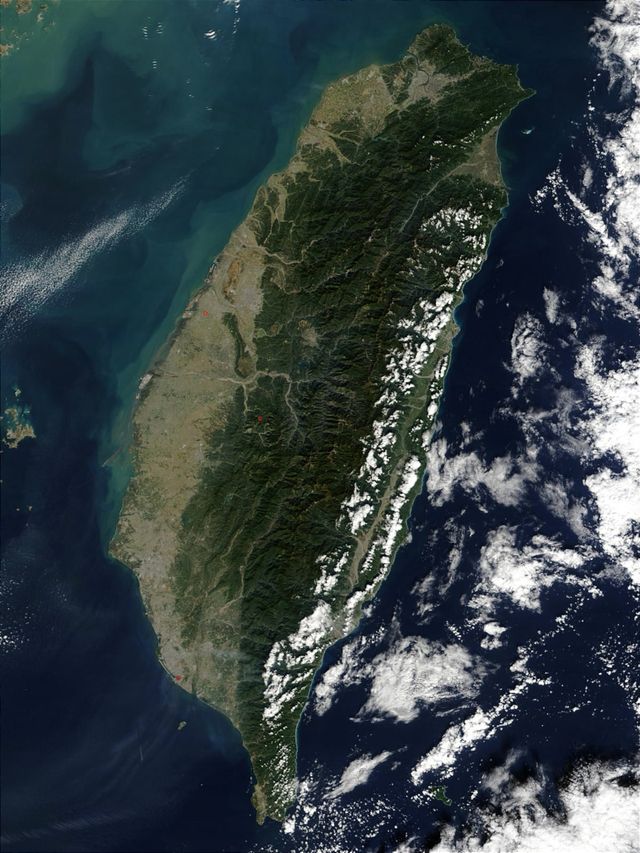
Geography is one of the governing constraints on military operations across the Taiwan Strait. Roughly a hundred miles of open water separate the island from the mainland: wide enough that a crossing is a major undertaking, narrow enough that the strait is one of the most heavily trafficked and contested spaces on earth. The same waters that carry much of the world’s trade also make the island so difficult to take by force.
The strait does not constrain every form of military power equally. Any attempt to seize the island would likely combine long-range strikes, cyber operations, unmanned systems, air assault forces and amphibious formations in a tightly integrated campaign. Yet each addresses only part of the operational challenge. Geography does not prevent military effects from reaching Taiwan; it is the movement, sustainment and expansion of forces ashore that remain the decisive challenge. An amphibious assault would still have to cross that hundred miles during limited periods of favourable weather, secure one of the island’s few suitable landing areas — long prepared for exactly that contingency — and then fight inland across increasingly restrictive terrain. Taken together, these constraints are among the principal reasons a full invasion remains the least likely outcome.
A calibrated read of one question — to be weighed against your own judgement. SIGMA is designed for decisions where understanding the strategic context matters more than following daily headlines.
- Entering an unfamiliar market
- Preparing executive or client briefings
- Assessing geopolitical exposure before an investment
- International travel planning (travel risk and duty of care)
- Monitoring regions important to your organisation
The reasoning behind the forecast.
The Foundation Paper sets out the complete analytical case behind this assessment — the strategic dynamics, the incentives, the competing pathways, and the calibration.
The reasoning behind the forecast.
The Foundation Paper sets out the complete analytical case behind this assessment — the strategic dynamics, the incentives, the competing pathways, and the calibration underlying SIGMA's published forecast. Membership opens the full case, continuing analysis as it develops, and the Strategic Intelligence Dashboard for a wider view of this and other active dyads.
All prices are in USD and renew automatically unless cancelled. For a larger team or a tailored arrangement, write to us at contact@sigmafutures.group.