North Korea–South Korea
Two non-kinetic outcomes
Two kinetic outcomes
An 87% chance the coming year stays below the threshold of combat — a decades-frozen armistice where the risk is miscalculation rather than a decision to go to war.
This decomposition reflects SIGMA's published judgement as of the assessed date. It is a committed, point-in-time position rather than a live figure; ongoing working analysis is available to members.
- 1950–53The Korean War ends with an armistice rather than a peace treaty.
- 1953The Demilitarised Zone is established.
- 1972The two states issue their first joint communiqué on peaceful reunification.
- 1991Both Koreas join the United Nations and sign a reconciliation agreement.
- 1992The two sign the Joint Declaration on the Denuclearisation of the Korean Peninsula.
- 2000The first inter-Korean summit is held in Pyongyang.
- 2010The warship Cheonan sinks and North Korea shells Yeonpyeong Island.
- 2018The two hold summits and sign the Panmunjom Declaration.
- 2020North Korea destroys the inter-Korean joint liaison office in Kaesong.
- 2022North Korea conducts a record number of missile tests.
- Throughout 2024North Korea demolishes cross-border road and rail links and escalates GPS jamming and balloon incidents.
- January 2025North Korea formalises South Korea's status as a hostile state in official documents.
Curated for strategic significance, not completeness. The timeline provides context; the Foundation Paper explains the assessment.
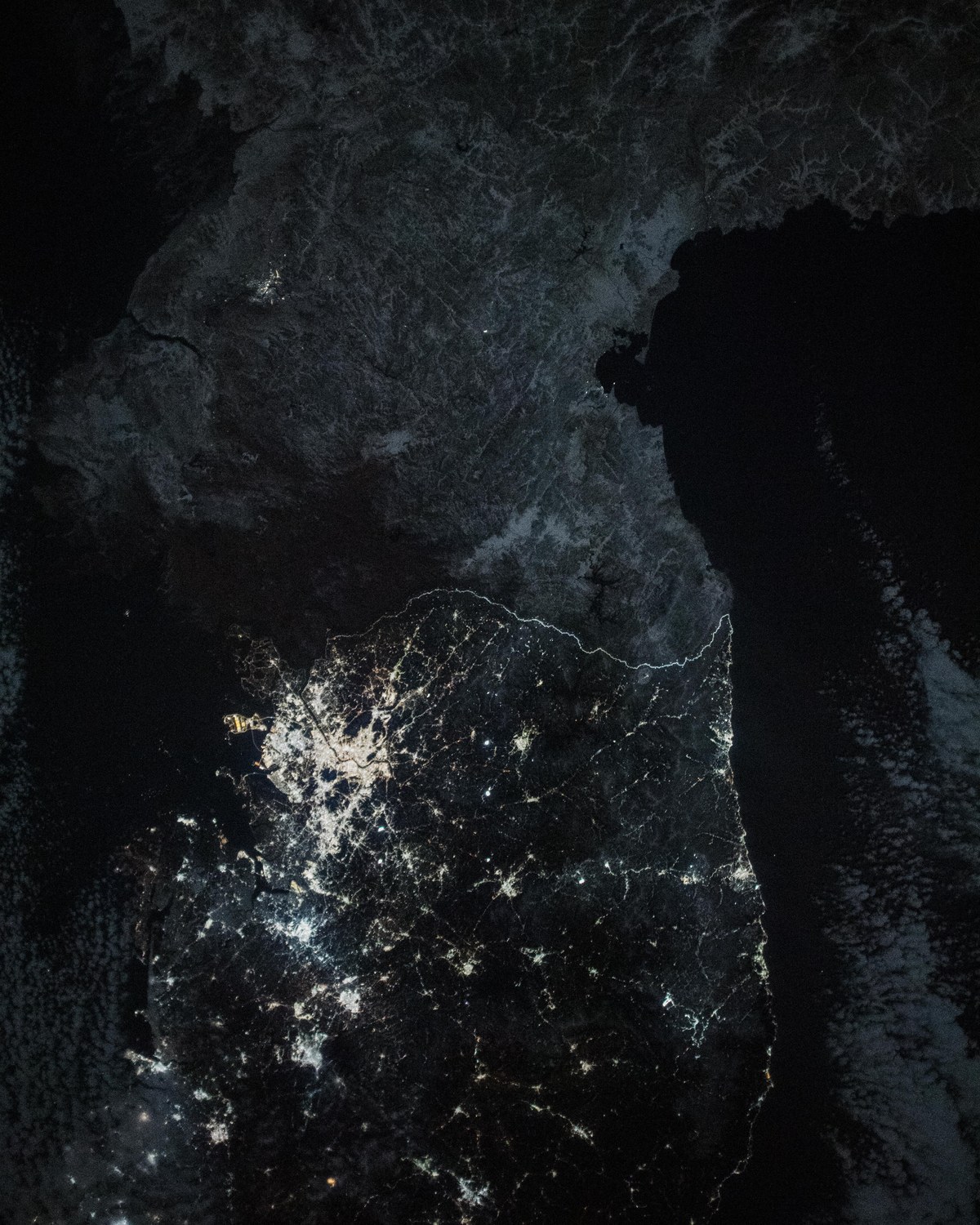
Downtown Seoul sits barely twenty-five miles from the Military Demarcation Line, and the invasion corridors that carried the war of 1950 remain open ground. Yet the same closeness that makes an attack physically simple makes it strategically impossible: thousands of artillery pieces and rocket launchers dug into the granite north of the line hold the capital permanently at risk.
The Demilitarized Zone—160 miles long, two and a half wide, the most fortified border on earth—is therefore a poor place for a war to begin. A million-strong army is postured behind it, but every metre is mined, wired and watched continuously by both sides; it is probably the most closely observed ground in the world, which makes surprise hard and accident harder. Even the 2015 land-mine maiming and the artillery exchange that followed it—the closest the land border has come to combat in a decade—was talked back down within days.
A calibrated read of one question — to be weighed against your own judgement. SIGMA is designed for decisions where understanding the strategic context matters more than following daily headlines.
- Entering an unfamiliar market
- Preparing executive or client briefings
- Assessing geopolitical exposure before an investment
- International travel planning (travel risk and duty of care)
- Monitoring regions important to your organisation
The reasoning behind the forecast.
The Foundation Paper sets out the complete analytical case behind this assessment — the strategic dynamics, the incentives, the competing pathways, and the calibration.
The reasoning behind the forecast.
The Foundation Paper sets out the complete analytical case behind this assessment — the strategic dynamics, the incentives, the competing pathways, and the calibration underlying SIGMA's published forecast. Membership opens the full case, continuing analysis as it develops, and the Strategic Intelligence Dashboard for a wider view of this and other active dyads.
All prices are in USD and renew automatically unless cancelled. For a larger team or a tailored arrangement, write to us at contact@sigmafutures.group.